Tuesday, 7 March 2017

Hydration Tips for the Golf Course

Berlin, Germany
Source: Flickr

Since golf is a warm weather sport – and often a hot weather sport – ensuring that you are properly hydrated is essential. If you don’t drink enough water, your body is not going to perform as well as it should and your golf game is sure to suffer.

Rather than loading up at infrequent golf course drink stations, you are better off drinking smaller amounts regularly. In order to do this, you should carry a water bottle or two with you. Continue to sip away at them, and refill them as needed when you do reach water stations. A good rule of thumb is to drink eight ounces of fluid before you even tee off, then continue to drink four to eight ounces every 15 minutes of play.

If you are playing a long round and will miss a meal, you may want to consider bringing a meal replacement drink. This is generally a dry powder mixed with water that can be used in the absence of a meal or to replace fluids. These will keep you hydrated, and help keep your blood sugar level in check.

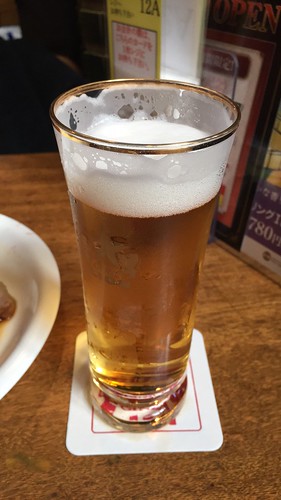
Many recreational golfers have a beer or two on the course. Keep in mind that alcohol dehydrates you; it does not count as drinking fluids to keep you hydrated. If you do choose to drink any alcohol while playing, be sure that you limit your consumption and include non-alcoholic beverages as well.

Don’t wait until you are thirsty to drink, because at this point your body is already dehydrated. Drink before heading out and continue to drink through your entire round. Dehydration creates fatigue, makes you uncomfortable and can cause you to lose your mental focus – an important element in the game of golf.

Diet and nutrition are just as important as fitness when it comes to creating a body that is optimized for a great game of golf. Be sure you keep hydration in mind each time you play.


source http://allofbeer.com/2017/03/07/hydration-tips-for-the-golf-course/

Let’s go fishing, who’s got the tacklebox?

Let’s go fishing, who’s got the tacklebox?

Más o menos
Source: Flickr

Well it’s that time of year again, time to dust off the rod and real, clean up the fishing lures that you forgot about last year, and buy a new pair hip boots. That’s right my friends, its fishing season. Time to get the beer in the cooler, load up the truck, hitch the boat, and get out to your favorite watering hole.

One of the things I like to do at the start of a new fishing season is pick up some new tackle. You see, I’ve spent all winter surfing the Internet for the best deals on the latest worms, floats, rods, and reels. Why? Who else am I to blame for last year’s failures? Who am I going to blame for the one that got away if not that lure that I had to buy at the start of last years season?

Like I said, I spent a lot of time online this winter looking at some of the latest and greatest equipment for our favorite sport. And while you can’t make it more complicated than depth finders, there seems to be resurgence in getting back to basics. I’ve seen a lot of ads for vintage lures, especially for trout fisherman. Old bamboo rods have become big again in some areas and it seems more and more people are enjoying the sport of angling than ever before.

But what makes a fisherman I ask myself, it’s got to be the fact that I have to make two trips to the truck just for all my tackle since you never know when you are going to need the skinny minnow in red instead of in purple, or maybe it’s black, oh I don’t remember. Maybe that’s why the 15 pound bass is still in the lake and not on my wall.

Well, whatever the reason, here’s to having a great fishing season!


source http://allofbeer.com/2017/03/07/lets-go-fishing-whos-got-the-tacklebox/

Monday, 6 March 2017

Tailgating Fun With Shrimp

A few too many
Source: Flickr


Football season means party time, and nothing is more fun than tailgating with friends before the big game.

Joe Cahn, the self-proclaimed “commissioner of tailgating,” suggests celebrating in style with Wild American shrimp, a finger food that easily complements beer, wine and soft drinks.

“Wild American shrimp go great with tailgating because it’s easy, simple and good,” said Cahn, who has driven 250,000 miles visiting thousands of cities and eaten his way through more than 370 tailgate parties.

Wild American shrimp is caught off the Gulf and South Atlantic coasts. Much of the shrimp consumers eat is pond-raised and imported.

“You have a choice and may not realize you are eating shrimp grown in ponds and imported to this country,” Cahn said. “And shrimp from the Gulf and Atlantic just tastes better.”

Wild American shrimp can be cooked ahead of time or grilled minutes before serving. Low in fat and packed with flavor, protein and cardio-protective omega-3 fatty acids, it gives party-goers plenty of energy to cheer for their favorite team.

For your next tailgating celebration, try this easy recipe from Wild American Shrimp Inc.:

GRILLED TEXAS WILD AMERICAN SHRIMP

(Makes 6 servings)

1/4 cup vegetable oil

1/4 cup tequila

1/4 cup red wine vinegar

2 tablespoons Mexican lime juice

1 tablespoon ground red chiles

1/2 teaspoon salt

2 cloves garlic, finely chopped

1 red bell pepper, finely chopped

24 large raw shrimp, peeled and

de-veined (tails left on)

Mix all ingredients except shrimp in shallow glass or plastic dish. Stir in shrimp. Cover and refrigerate for 1 hour.

Remove shrimp from marinade, reserving liquid. Thread 4 shrimp on each of six (8-inch) metal skewers. Grill over medium coals, turning once until pink, 2 minutes to 3 minutes on each side.

In a non-reactive saucepan, bring marinade to a boil. Reduce heat and simmer, uncovered, until bell pepper is tender, about 5 minutes. Serve with shrimp.


source http://allofbeer.com/2017/03/06/tailgating-fun-with-shrimp/

The Best Advice On the Taller Bar Stools

Noble 6th Anniversary (full size)
Source: Flickr


For most of the bar counters and kitchen counters, they stand about 40 inches tall, this has been the norm for many years.
However, this has recently changed though with bar counters and kitchen tops being raised 6 inches.

This is like a spanner in the works for bar owners and home buyers who need to find taller bar stools to suit their counters. Enter the 34 inch bar stool! This bar stool is the solution to the problem of the higher counter.

If you want you can still use the standard 30 inch bar stool for the higher counters but this would create a sizable distance differential from where you are sitting to where you are eating or drinking and then you would spend more time straining to have your dinner or beer comfortably rather than just relaxing.

Have you ever been in a bar or restaurant and the stools or chairs were not the right size for you were sitting? This happens a quite frequently in establishments that have multiple seating areas such as booth areas as well as a seating area. The problems you face here is that after a time the seats or lounge chairs begin to sink, you then suddenly feel like the tabletop is right in your face.

Sitting on a 34inch bar stool at a 45 inch counter or table is the perfect combination the stools are just at the right distance from the bar top to maintain optimum comfort. Another good use for 34 inch bar stools is for people who are really tall and find it uncomfortable sitting on regular bar stools having to keep their legs bent while resting them on the bottom rung.

Standard bar stools have seats that are 30 inches from the ground. This is a good sitting position for patrons of regular height but not as good for those of the taller persuasion who require more height in their furniture.


source http://allofbeer.com/2017/03/06/the-best-advice-on-the-taller-bar-stools/

Sunday, 5 March 2017

Family-Friendly Spring Break Tips

Crescent City Brewery
Source: Flickr

You want to take the family on a nice vacation in the Spring but you don’t want Junior to learn what “chug, chug, chug, chug” means yet. You want to have a nice “family” vacation without getting caught up in the “Girls Gone Wild” atmosphere that traditionally surrounds Spring Break. Here are some tips.

Try to take your vacation when most college students are still in school. Spring Break for college students can be from the end of February to the end of March, but most colleges have vacation the first two weeks of March. Plan your vacation after the first two weeks of March.

Avoid the traditional Spring Break college destinations: Jamaica, Cancun, Acapulco, Montego Bay, the Bahamas, South Padre Island off of the state of Texas, Daytona, South Beach, Key West and Panama City, which are all in the state of Florida. Basically anyplace warm, with sand and with beer. However you don’t have to bring your family to Nome, Alaska either. Again, the off-peak college spring break times these destinations can be great, but that doesn’t account for the high school kids who have left the parents at home.

Choose a destination that is “family friendly” such as Disney World in Orlando. There could be a few college students donning a pair of mouse ears completely wasted but since Orlando is far from the beach it is more likely to be a fluke. Look for vacations advertised as “family friendly”, a ski vacation, Disney Land in California, or a trip to Colorado or Destin, Florida as these are all good possibilities. You can also check out your state tourism web sites for ideas of where to go where the drinking age is not an issue. Check out magazines like “Family Fun” which feature family vacation destinations every month for ideas.

Finally, remember — if you happen upon a partying college student, relax, one day it will be Junior’s turn.


source http://allofbeer.com/2017/03/05/family-friendly-spring-break-tips/

Puerto Rico The Hidden Island Party Spot

Beer
Source: Flickr

Taste the rum and practice the Salsa on the Caribbean island paradise of Puerto Rico. The islands are located in the Caribbean sea, just east of the Dominican republic, with about 3/4 Spanish and 1/4 English speaking natives. But don’t worry: all tourist areas are primarily English speaking. Puerto Rico is a commonwealth of the United States which includes one main island, Greater Antilles, and several smaller islands and keys. While largely mountainous, you’ll find spectacular, sandy beaches along the northern coastline.

Imagine sunbathing, surfing, kayaking and golfing by day, then partying by night within mild, tropical marine climate ranging between 75 to 80 degrees Fahrenheit year-round. Escape from the rat race and experience some of the finest dining, gaming, pulsing discos and bars.

Indulge on the finest Spanish cuisine with a unique American, African and Taino twist. Taste succulent corn and fruits, crunchy cod fritters, black bean soup, kettle-cooked stews, lamb, fried beefsteak and onions, plus barbecued pig. For desert, island guests enjoy some of the finest banana cupcakes, custard and nisperos de batata, or sweet potato balls with cloves, coconut and cinnamon. Then, don’t forget to tantalize your taste buds with Puerto Rican coffee, beer or rum of any shade, the national drink.

As the sun sets, the fun explodes from the cobble-stoned city of San Juan to Santurce and the Condado-Isla Verde strip. Place your bet at hotel casinos, enjoy fantastic live jazz and wild nightclubs. Then take a midnight dip in the temperate tropical waters. Visit Mosquito Bay in Vieques and watch the bioluminescence display among beach-lined mangrove trees. Tour the Phosphorescent Bay in La Parguera, where affordable boat rides escort you into darkness to watch a thrilling display of underwater fish flashing neon-green lights.

Get away from it all, unwind and refresh in Puerto Rico. To learn more about fantastic seasonal travel deals, visit Vasrue.com Travel, today.


source http://allofbeer.com/2017/03/05/puerto-rico-the-hidden-island-party-spot/

Saturday, 4 March 2017

bottle openers – did you know?

bottle openers – did you know?

IMG_6664
Source: Flickr

There are surprisingly many different kinds of bottle openers out there, but the two most popular by far are corkscrews and bar blades or crown cork removers. Corkscrews are used for opening bottles with corks, such as bottles of wine or champagne. To use them, you just screw them into the cork, and then push down on the sides and pull the cork out.

Bar blades and crown cork removers, on the other hand, cannot open corked bottles. They are basically just the end section from a corkscrew, used to quickly open capped bottles. There is nothing they can do that a corkscrew can’t, but they are much smaller, easier to carry and cheaper to manufacture. These kinds of bottle opener are often stuck to tables or walls, making it easy to just grab a bottle and open it. You can even get them on belts!

For all bottle openers are so cheap and disposable, however, it’s still surprisingly easy to find yourself without one. In this situation, the best thing to do is to simply use a knife (make sure to use the side that isn’t sharp) or some other pointy object, such as a screwdriver. In the original 1891 bottle cap patent, this is actually how the inventor of the crown cap that is now used everywhere, William Painter, says that his caps should be removed – he didn’t invent the bottle opener until two years later. Note that it is a very bad idea to try to get a bottle cap off with your teeth, unless you weren’t fond of them anyway.

Today, however, bottle caps are being gradually replaced with screw caps, which means that the bottle opener is in terminal decline. It seems likely that in the future bottle openers will only be required for wine and beer, with other drinks coming with the much easier to open screw caps.


source http://allofbeer.com/2017/03/04/bottle-openers-did-you-know/